
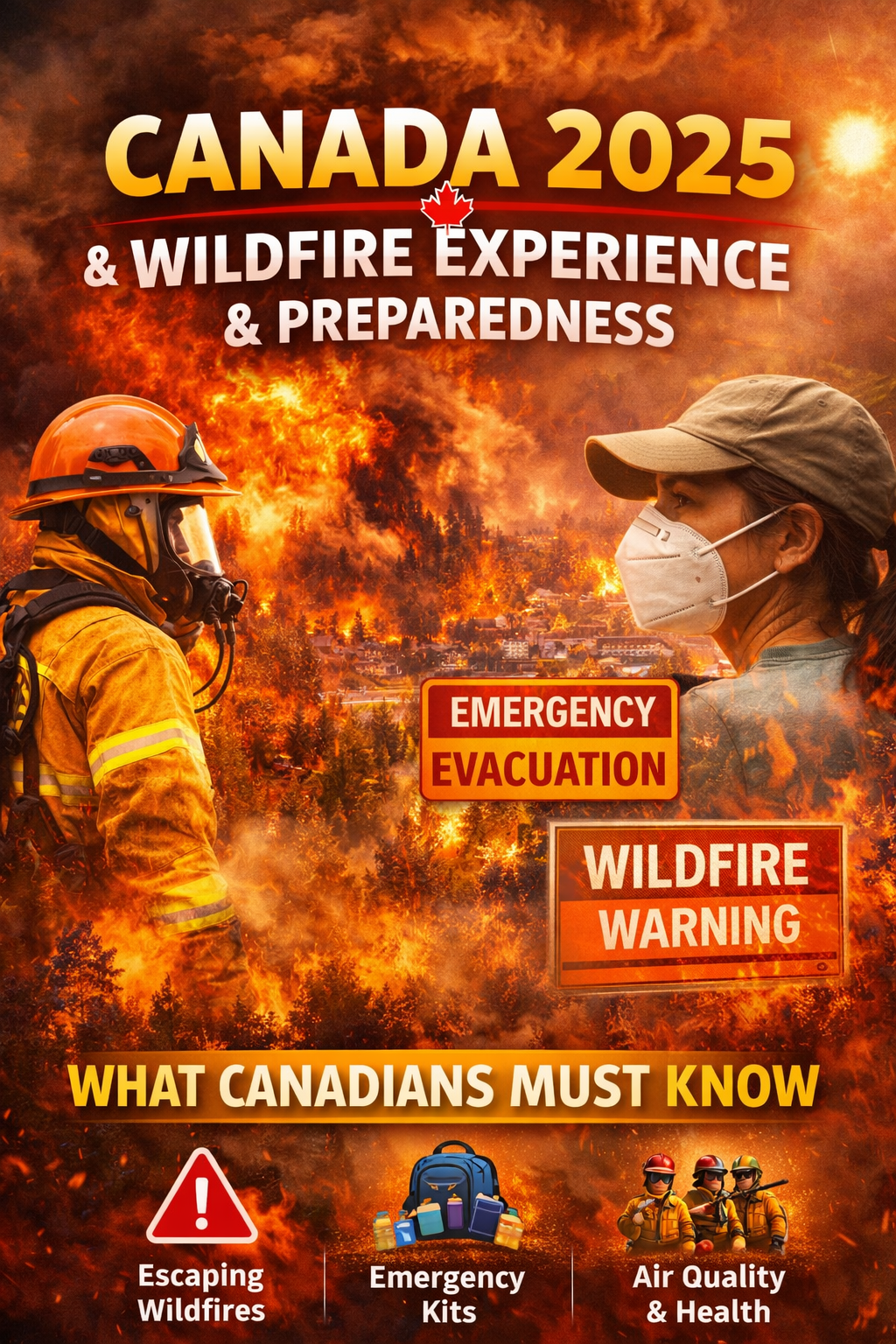

Wildfires have become one of Canada’s most serious public safety challenges in 2025. Longer fire seasons, extreme heat, and widespread smoke are affecting millions of Canadians from coast to coast. What was once a seasonal concern is now a recurring national reality.
The Canada 2025 wildfire experience highlights the urgent need for awareness, preparedness, and community resilience. This guide explains why wildfires are increasing, their impacts on health and daily life, and how Canadians can stay safe.
Why Wildfires Are Increasing Across Canada
Climate Change and Rising Temperatures
Warmer temperatures, reduced snowpack, and prolonged heatwaves have created ideal conditions for wildfires. Forests and grasslands dry out faster and burn more intensely.
Prolonged Drought Conditions
Recurring droughts in Western and Central Canada increase available fuel, allowing fires to spread rapidly.
Human Activity
Campfires, industrial activity, rail operations, and discarded cigarettes remain major ignition sources, especially during dry periods.
Most Affected Regions in Canada (2025)
While wildfire risk exists nationwide, certain regions are especially vulnerable:
- British Columbia – Dense forests and dry summers
- Alberta – Grasslands and boreal forest fires
- Northern Ontario – Remote fires with limited access
- Quebec – Large-scale forest burn zones
- Northern Territories – Climate-sensitive boreal regions
Even cities far from fire zones are impacted due to long-distance smoke travel.
Health Impacts of Wildfire Smoke
Air Quality and PM2.5
Wildfire smoke contains fine particulate matter (PM2.5), which can penetrate deep into the lungs and bloodstream.
Common Health Symptoms
- Shortness of breath
- Chest tightness
- Eye, nose, and throat irritation
- Headaches and fatigue
- Worsening asthma or heart conditions
High-Risk Groups
- Children
- Seniors
- Pregnant individuals
- People with respiratory or cardiovascular diseases
Canada 2025 Wildfire Preparedness: Essential Steps
1. Create a Wildfire Emergency Plan
Every household should have:
- Clear evacuation routes
- Family communication plans
- Emergency meeting points
- Backup transportation options
2. Prepare an Emergency Go-Bag
Your wildfire emergency kit should include:
- Copies of identification documents
- Prescription medications
- N95 or KN95 masks
- Bottled water and non-perishable food
- Flashlight, batteries, and power banks
- First-aid supplies
3. Protect Your Home From Wildfires
- Clear dry leaves and debris
- Maintain defensible space around your home
- Use fire-resistant roofing and siding
- Clean gutters regularly
Evacuation Readiness and Safety
When to Evacuate
Always evacuate immediately when ordered by authorities. Delaying evacuation can put lives at risk.
Evacuation Safety Tips
- Follow official evacuation routes
- Keep vehicle windows closed
- Bring pets and emergency kits
- Monitor official alerts and updates
Protecting Yourself From Wildfire Smoke
Indoor Air Safety
- Keep windows and doors closed
- Use HEPA air purifiers
- Seal gaps and cracks
- Avoid indoor smoke sources
Outdoor Safety
- Limit outdoor activities
- Wear N95 or KN95 masks
- Avoid strenuous exercise outdoors
Government, Emergency Services & Fire Management
Federal and provincial governments are increasing investments in:
- Early wildfire detection systems
- Firefighting technology
- Interprovincial and international response coordination
- Public alert and evacuation systems
Indigenous Fire Stewardship and Traditional Knowledge
Indigenous communities have used controlled burns and land stewardship for generations. Integrating traditional knowledge with modern wildfire management improves forest health and reduces extreme fire risk.
Building Community Wildfire Resilience
- FireSmart community programs
- Public education campaigns
- Emergency drills and preparedness training
- Forest management partnerships
Frequently Asked Questions
Is Canada’s wildfire season getting worse?
Yes. Climate change, drought, and human activity have significantly increased wildfire frequency and severity.
How can I check wildfire risk in my area?
Monitor provincial wildfire services, emergency alerts, and local government updates.
Are N95 masks effective against wildfire smoke?
Yes. N95 and KN95 masks reduce inhalation of harmful PM2.5 particles.
Should I evacuate even if the fire seems far away?
Always follow official evacuation orders, regardless of perceived distance.
Conclusion: Living With Wildfire Risk in Canada
The Canada 2025 wildfire experience reflects a new environmental reality. Wildfires are no longer isolated emergencies but a nationwide challenge affecting health, safety, and infrastructure.
Preparedness saves lives. By planning ahead, staying informed, and supporting community resilience, Canadians can reduce risk and face wildfire seasons with confidence.